Equity
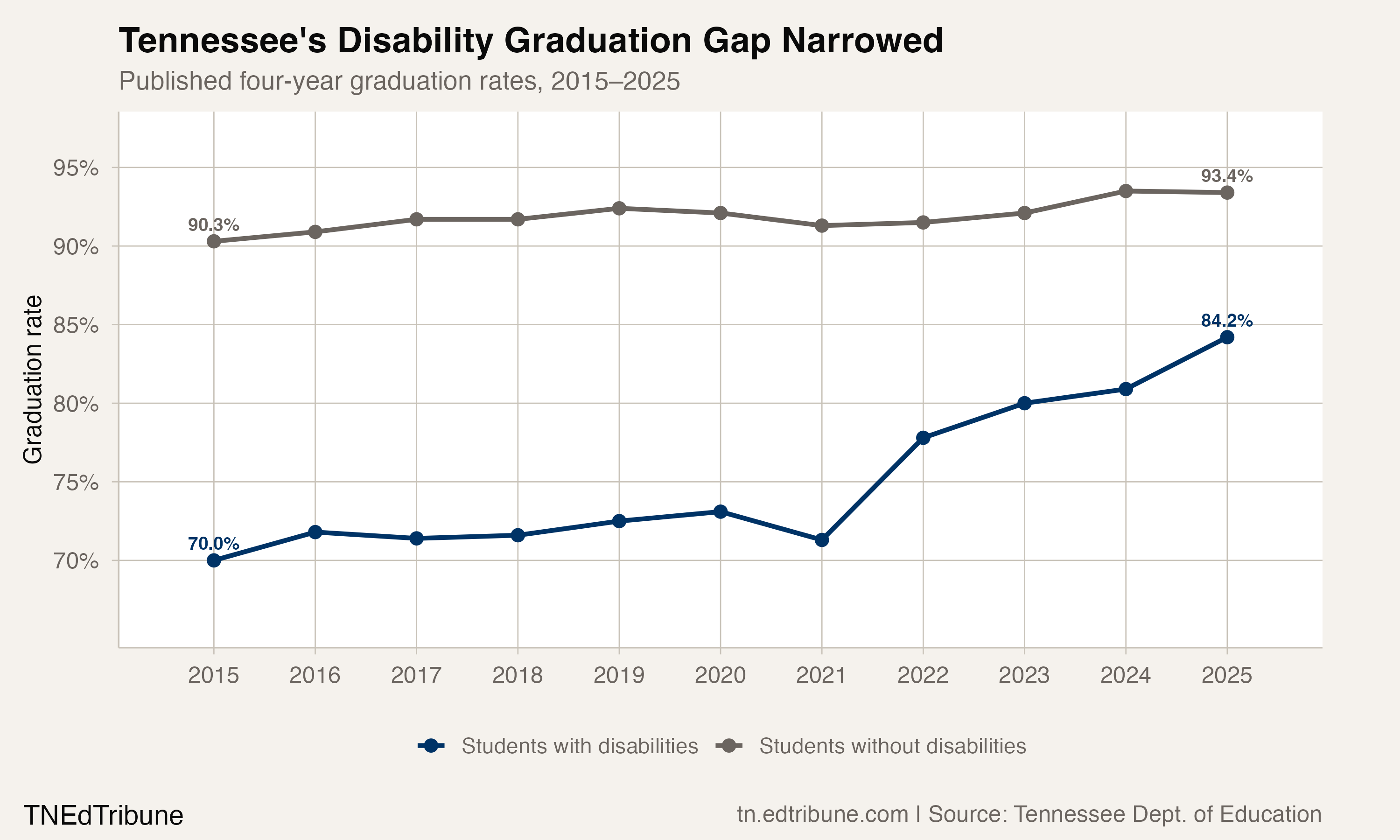
Tennessee's Special Education Graduation Gap Fell by More Than Half
The gap narrowed from 20.3 points in 2015 to 9.2 in 2025 as the special education graduation rate rose 14.2 points.
Volunteer State Education Coverage, Driven by Data
Education News & Data
Local education reporting from every corner of Tennessee, grounded in Tennessee Department of Education data.
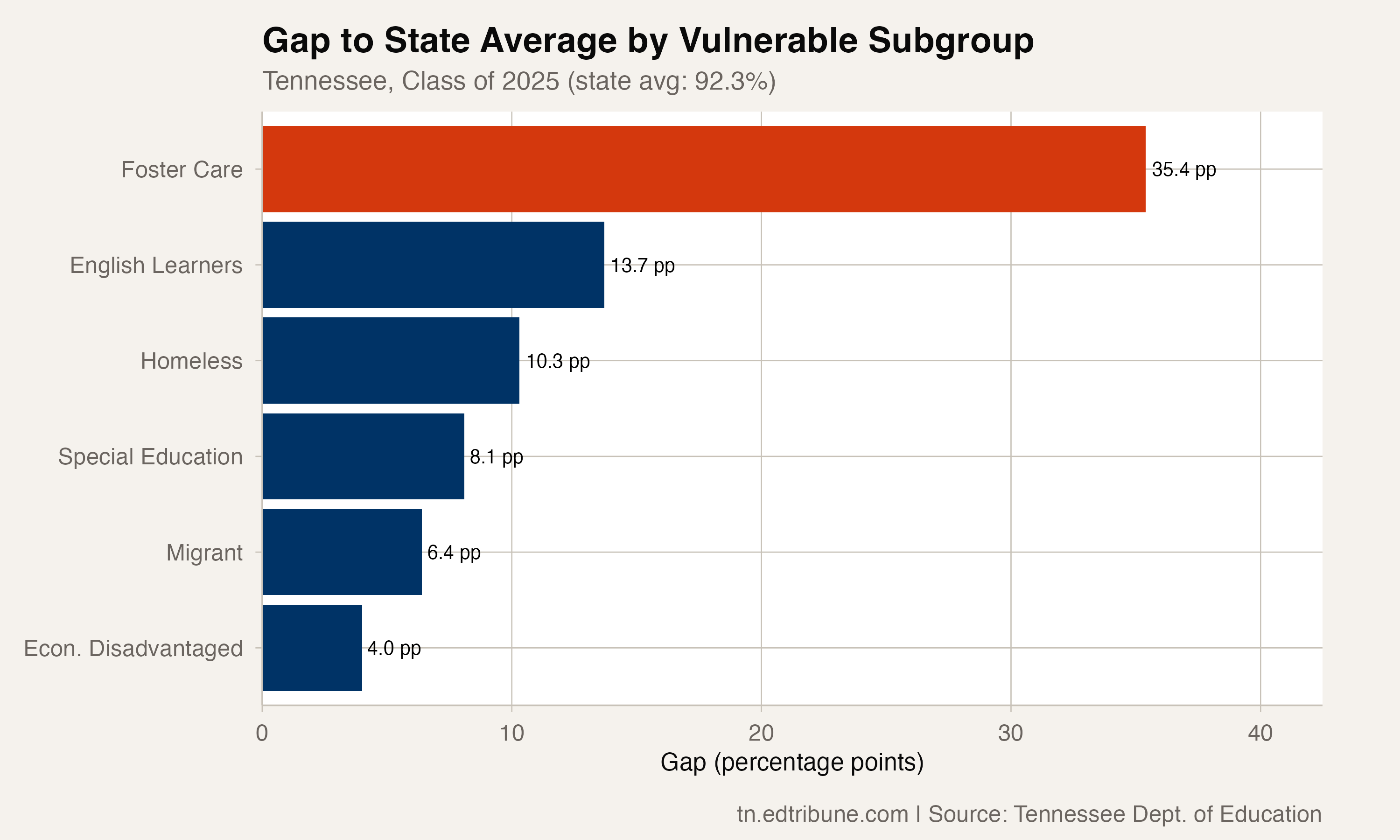
Students experiencing homelessness in Tennessee graduated at 82.0% in 2025, up from 73.6% in 2018. The gap to the state average narrowed from 15.5 to 10.3 points on a growing cohort.
The female-male graduation gap in Tennessee narrowed from 5.7 points in 2018 to 3.3 points in 2025, driven by male improvement of 4.4 points over seven years.
Tennessee's four-year graduation gap between free/reduced-price lunch and other students fell from 12.9 points in 2021 to 6.3 in 2025.
Hamilton County's graduation rate rose from 83.8% in 2015-16 to 94.2% in 2024-25 while the graduating cohort grew.
The gap narrowed from 20.3 points in 2015 to 9.2 in 2025 as the special education graduation rate rose 14.2 points.
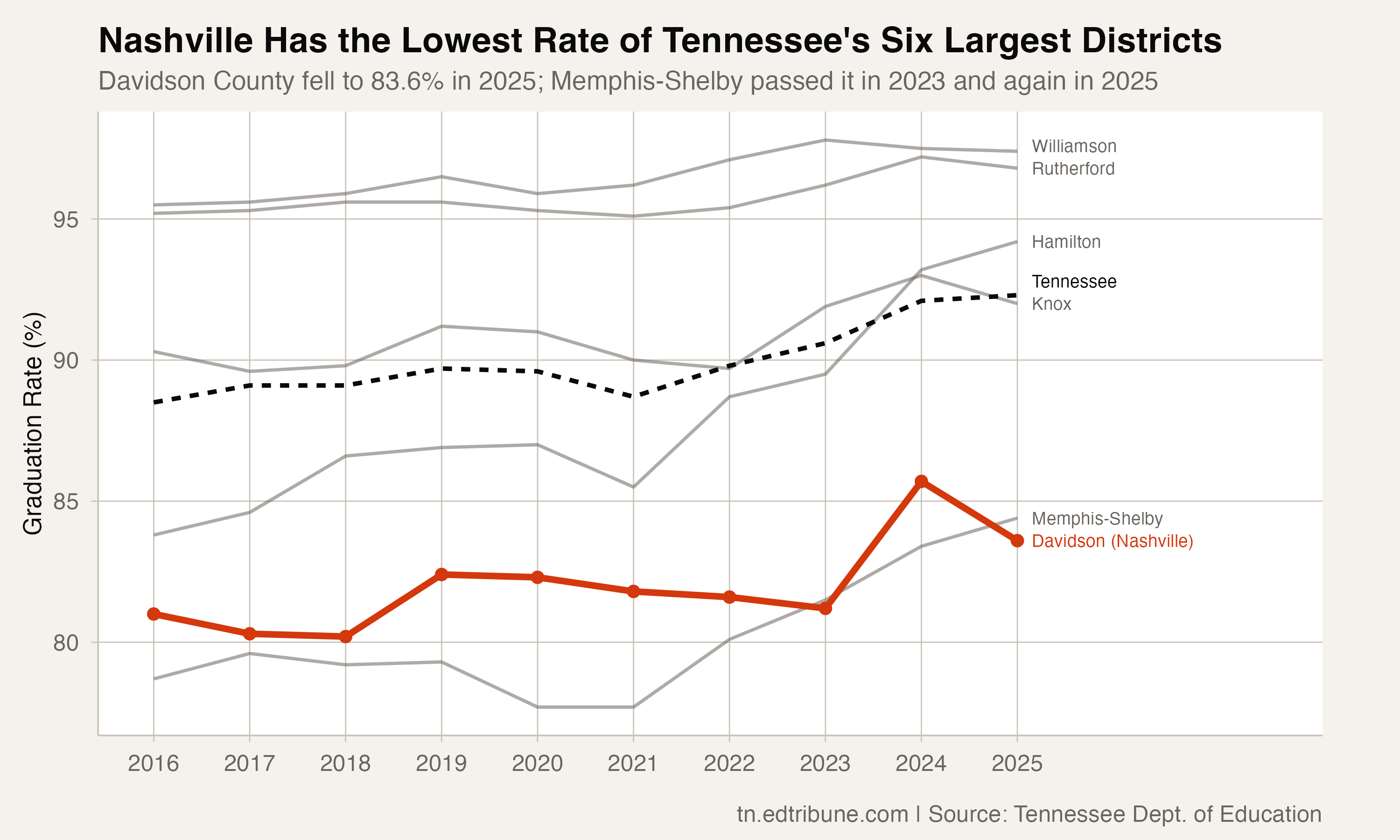
Davidson County's graduation rate fell from 85.7% to 83.6% in 2025, while Tennessee reached 92.3%, the highest in its published series. Hispanic students in Nashville graduated at 73.2%.
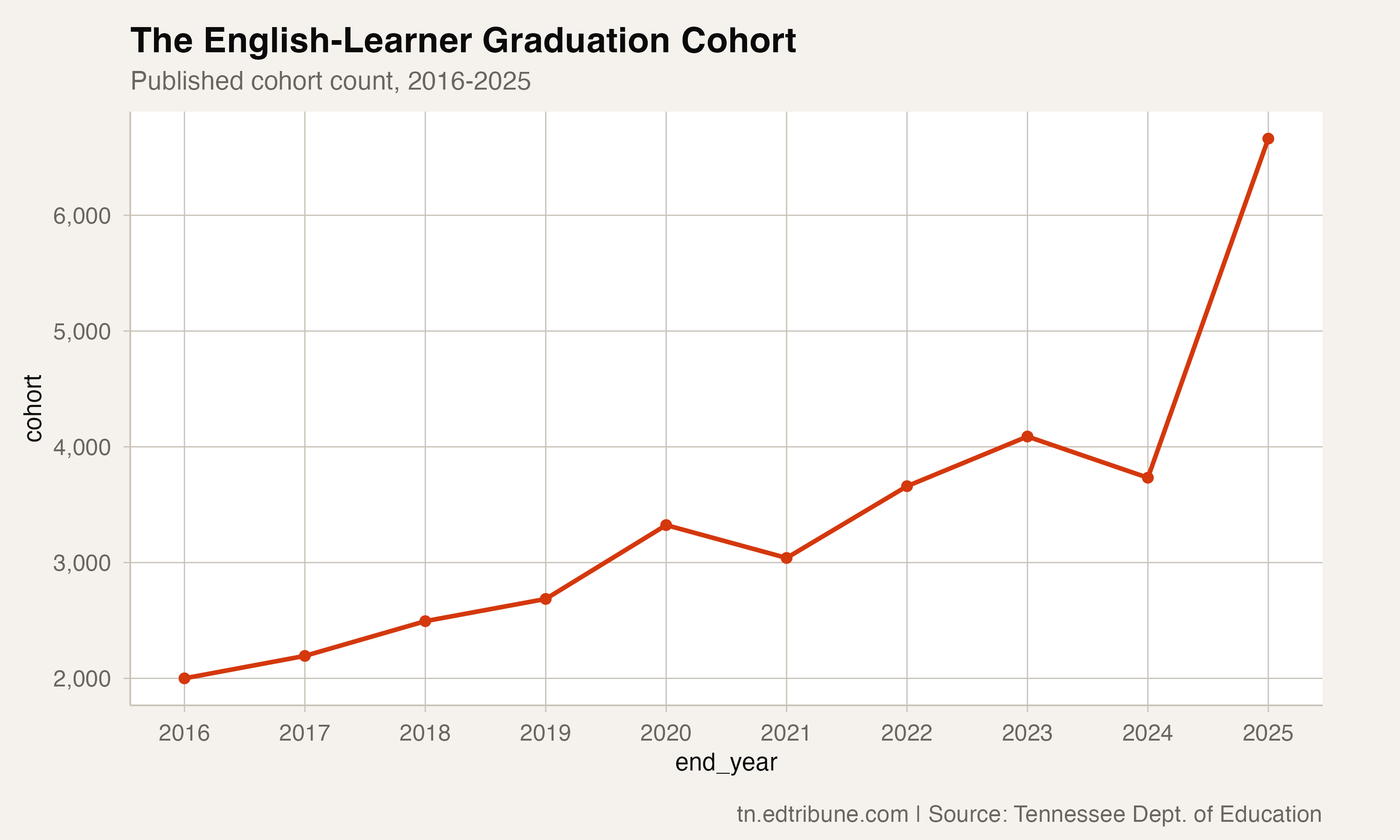
Tennessee's English-learner graduation rate rose from 67.1% in 2023 to 78.6% in 2025, while the gap to the state average remained 13.7 points.
Tennessee's graduation rate for students in foster care rose from 48.7% to 56.9% since 2023. The 35.4-point gap to the state average is the state's widest.
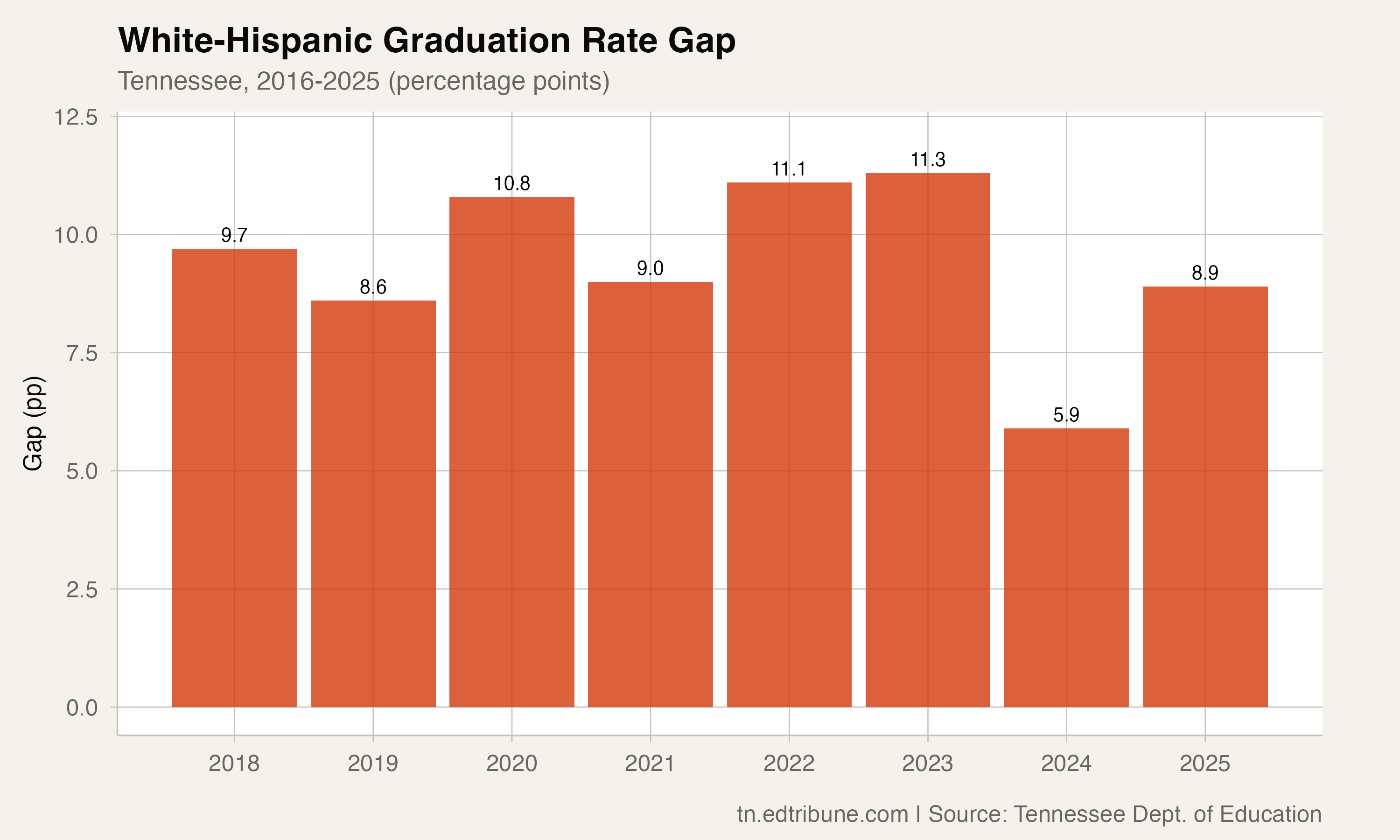
Tennessee's Hispanic graduation cohort has more than doubled since 2018, but the 2025 Hispanic graduation rate still trails the state average by 6.1 points.
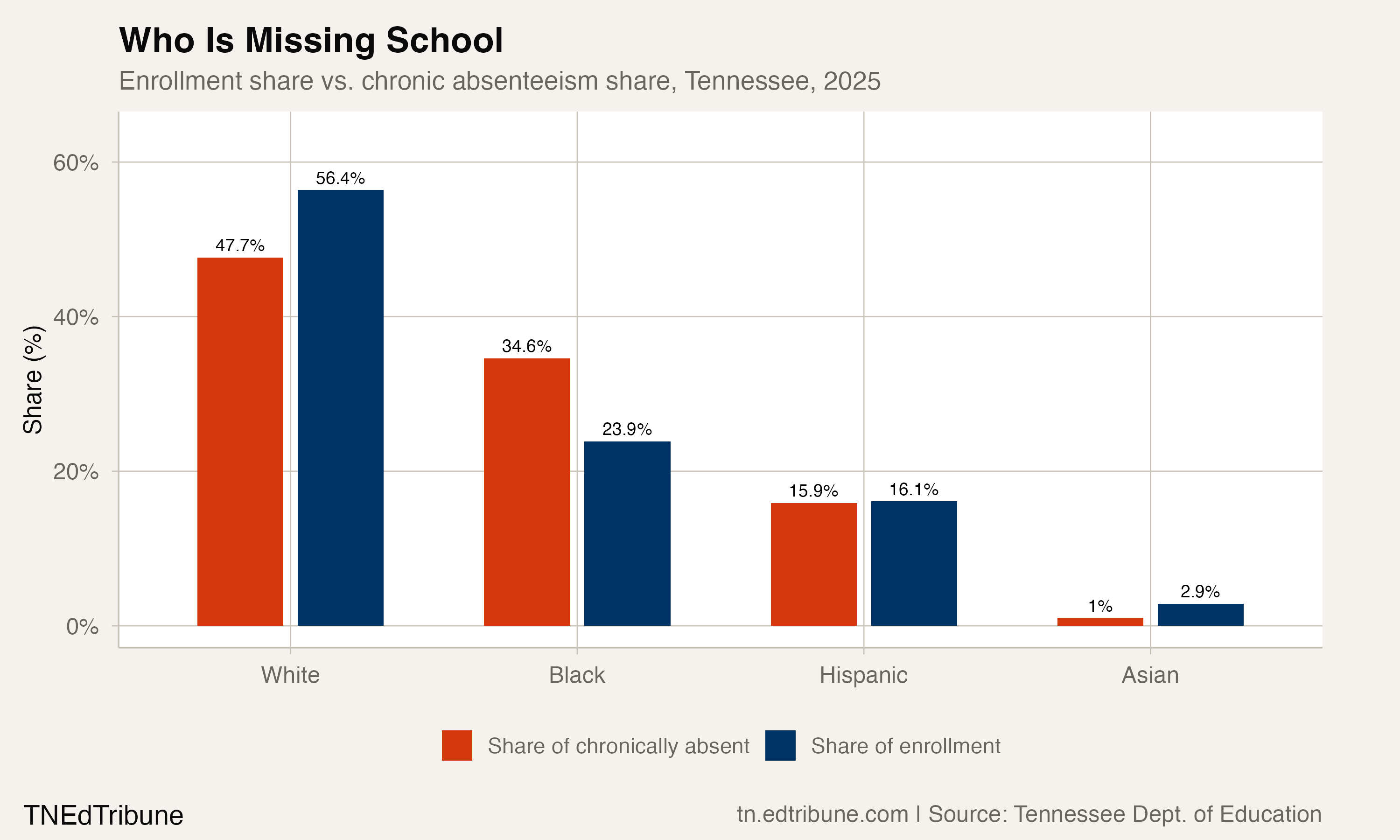
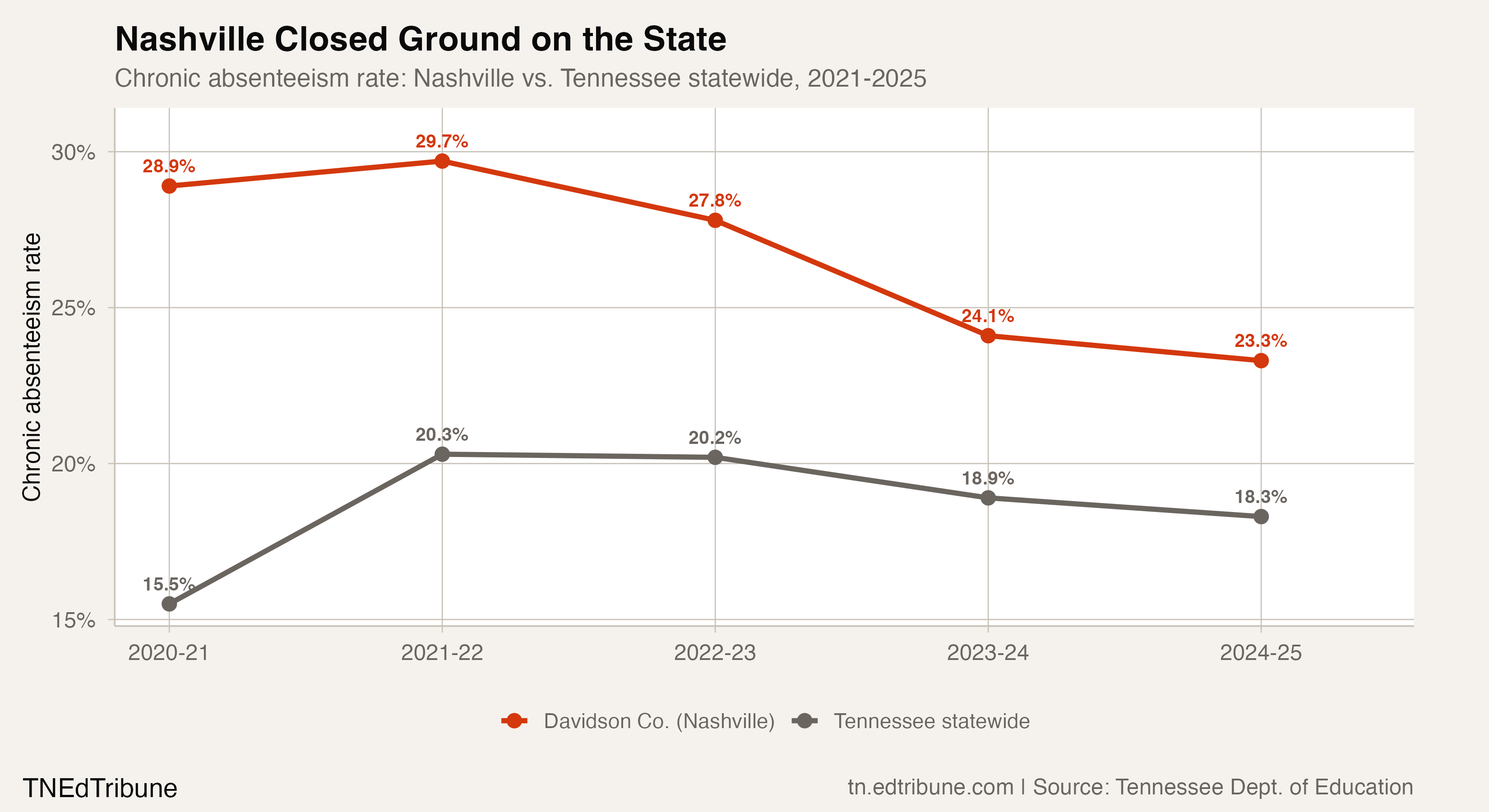
Davidson County posted the strongest attendance recovery among Tennessee's largest districts, but Black and low-income students still miss school at rates that dwarf their peers.
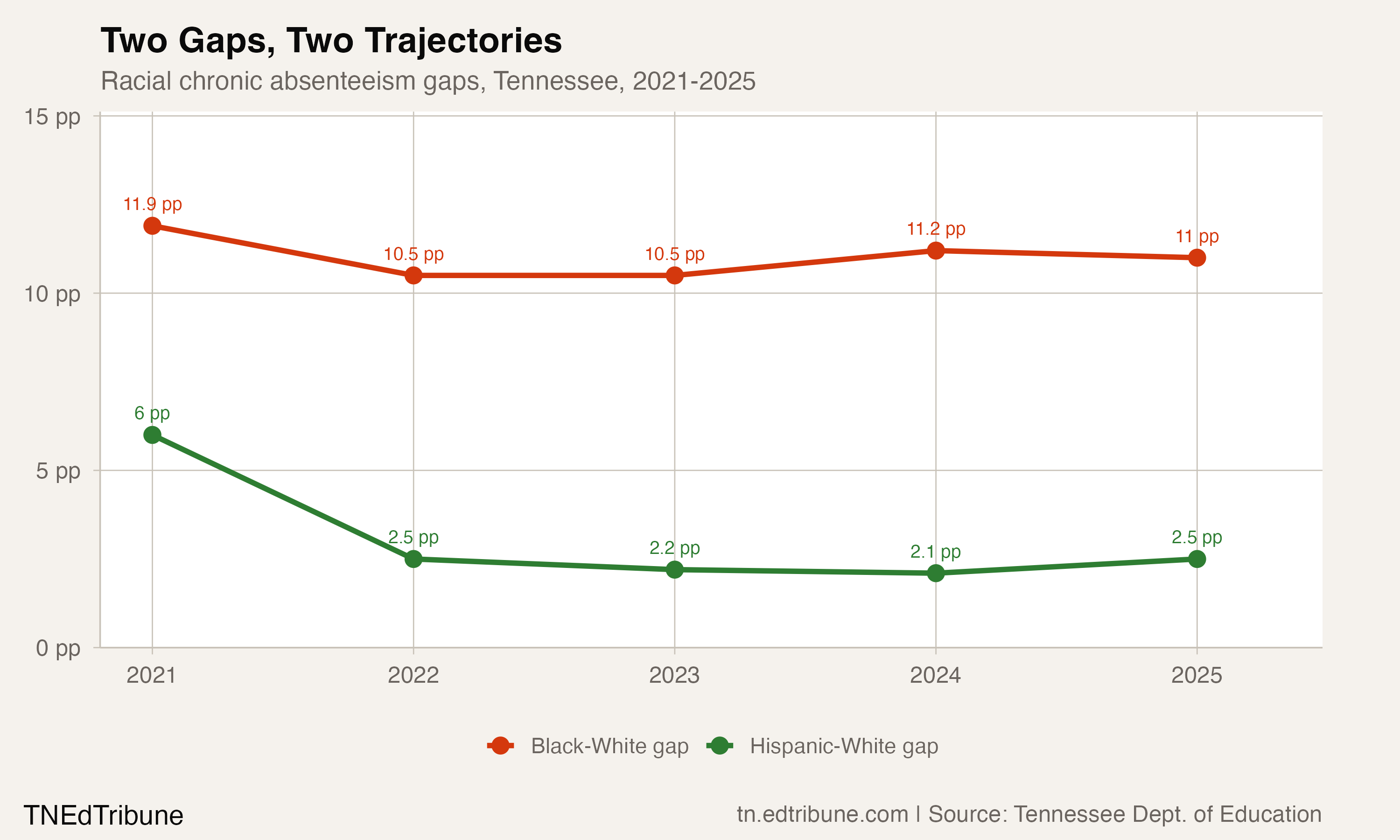
The Hispanic-white chronic absenteeism gap in Tennessee narrowed from 6 percentage points to 2.5, even as the Black-white gap barely moved.
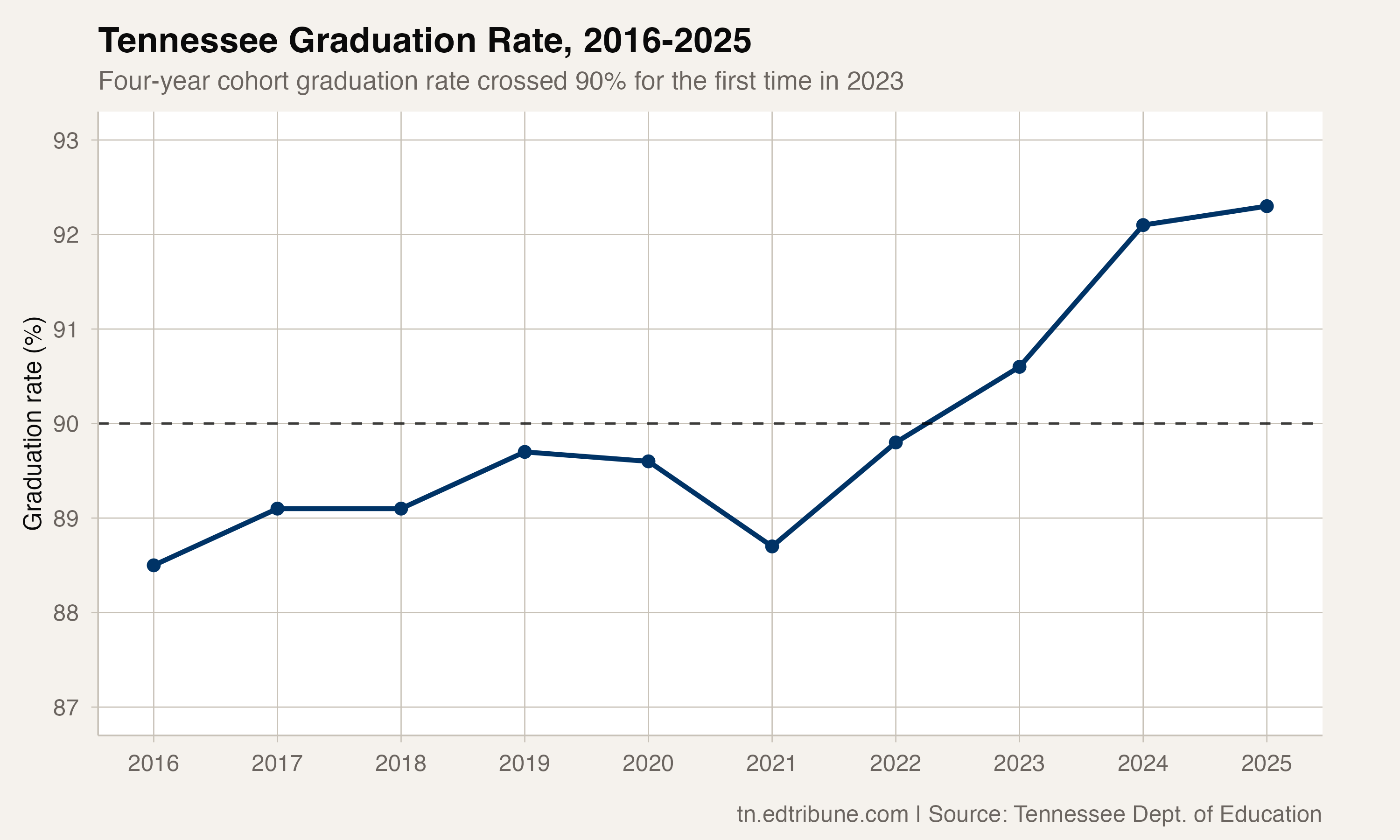
Tennessee's graduation rate hit 92.3% in 2025, setting an all-time record on a growing cohort of nearly 75,000 students.
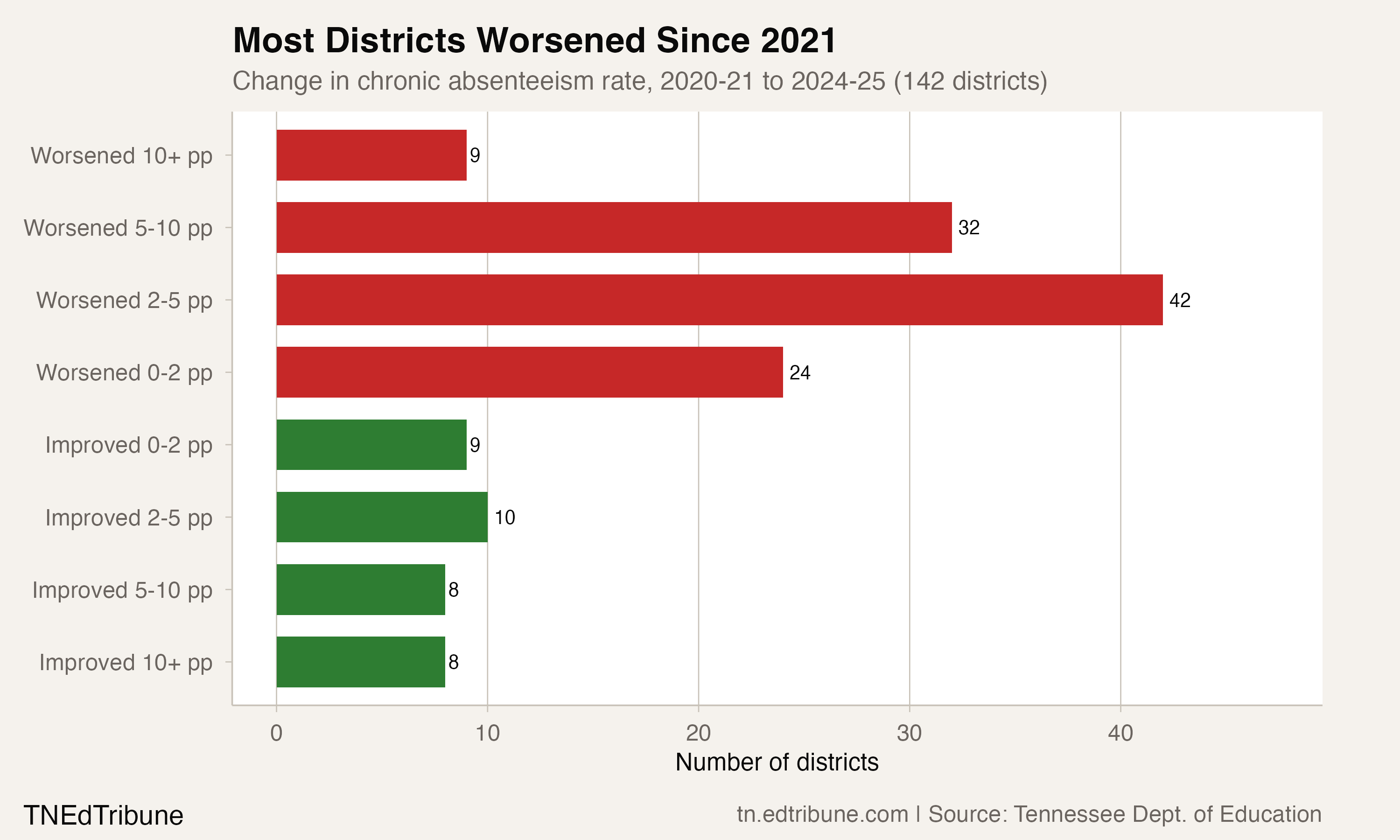
Only 35 of 142 Tennessee districts have recovered to 2020-21 chronic absenteeism levels. The pandemic reset attendance norms for 75% of communities.
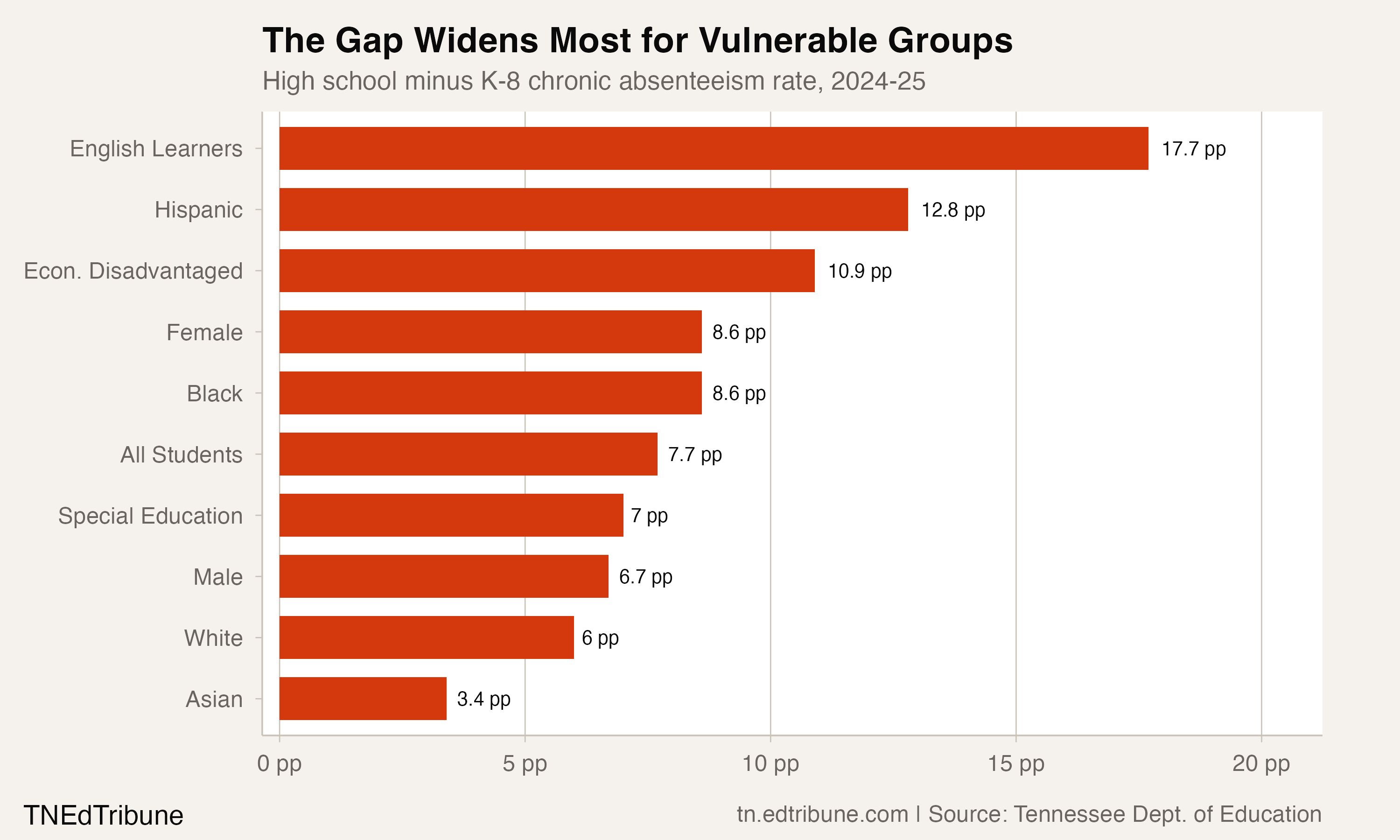
Tennessee's high school chronic absenteeism rate is nearly 50% higher than K-8, and the gap has widened every year since 2023.
Three in four Black students in Tennessee attend school regularly. Nashville cut its Black chronic absence rate 7.8 points in three years — the steepest sustained recovery of any large district in the state.